The global challenge of sand and dust storms is not just an environmental nuisance; it is a massive, transboundary economic and health crisis. With an estimated 2 billion tonnes of sand and dust circulating through our atmosphere annually, affecting over 150 countries and regions, the scale of the disruption is staggering. It impacts everything from agricultural yields to the operational efficiency of global logistics and public health systems. As we reflect on the International Day of Combating Sand and Dust Storms, it is clear that China’s shift toward a highly integrated, technology-driven approach provides a necessary blueprint for global action.
What makes this shift significant is the integration of high-precision monitoring tools. We aren't just talking about basic weather balloons anymore; we are looking at a system anchored by the Fengyun-4B meteorological satellites combined with deep-learning AI models. This infrastructure enables researchers to map dust transport pathways with a level of accuracy that was unthinkable a decade ago. By utilizing AI-assisted forecasting, authorities can now issue localized warnings hours, or even days, in advance. For the logistics sector, this level of granularity—predicting particulate matter concentrations with high spatial resolution—can help reduce transport delays by optimizing routes and adjusting operational schedules in high-risk zones, potentially saving millions in fuel and lost productivity.
Beyond the hardware, the real breakthrough is the emphasis on data sharing and international governance. Sand and dust do not respect national borders, and as noted in coverage by People's Daily, the transition toward an "inclusive partnership model" is essential for effective environmental management. By hosting the WMO Regional Specialized Meteorological Centre (RSMC) in Beijing, China is moving from merely managing its own domestic land degradation to providing a public good: operational forecasting products and technical expertise for the entire East Asian region. This regional cooperation, particularly the recent data exchange agreements with Mongolia and the technology transfer initiatives with Central Asian countries, is a textbook example of how to manage a shared environmental risk.
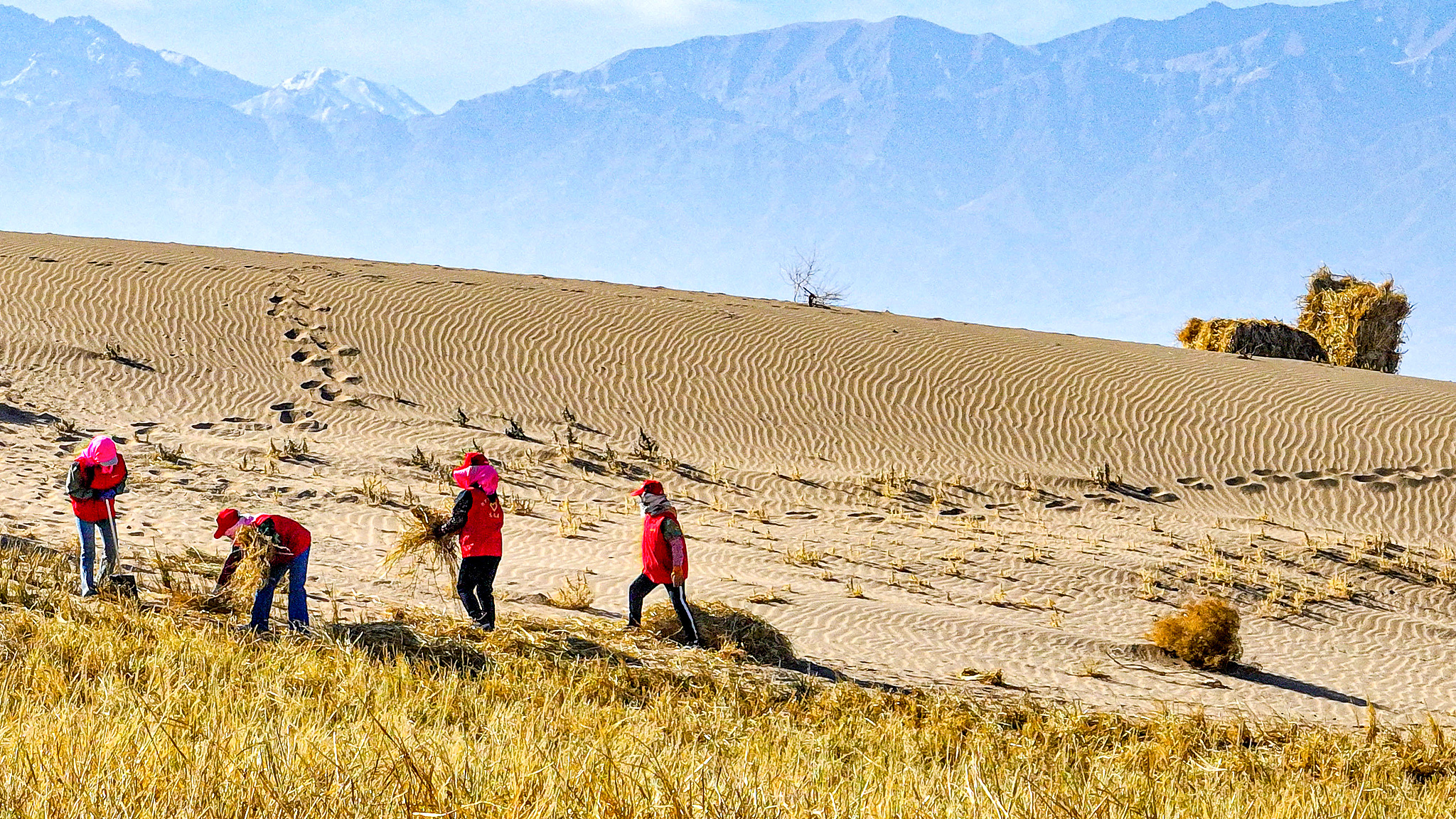
The financial and operational implications of this strategy are substantial. China’s revised 2026 Dust Weather Warning Standard is not just a bureaucratic update; it is an optimization of disaster response protocols. By expanding warning categories, governments can better allocate resources—deploying healthcare support or protective measures for infrastructure precisely where and when they are needed. When we consider that the UN Decade on Combating Sand and Dust Storms (2025–2034) is now in full swing, these proactive measures—combining ecological restoration (like sand barriers) with sophisticated early warning systems—are the most cost-effective way to mitigate the long-term impact on global health and the economy.
The path forward is clear: success requires a blend of massive, sustained investment in monitoring infrastructure and a collaborative framework that treats atmospheric health as a shared, global responsibility. By sharing its operational experience and technological innovations, China is effectively lowering the entry barrier for other nations to participate in advanced environmental governance. This is a critical pivot point; as the volatility of our climate increases, our ability to translate high-frequency, complex meteorological data into actionable, life-saving policy will become the defining measure of successful international environmental strategy.
News source: https://peoplesdaily.pdnews.cn/china/er/30052640149